Which DNA Test Should I Choose?
Many people have questions about their family tree and if they share a biological relationship with someone. Today, it is easier than ever to find out! More and more DNA testing is available at very affordable prices so you can get the answers you’re looking for. The question is…. “which test do I need?” That depends upon what type of biological relationship you need to prove or disprove and which family member(s) can and will participate in the test.
The most common types of relational DNA tests available are paternity, maternity, sibling, avuncular aunt/uncle, or grandparent DNA testing. There are a few on a broader spectrum such as a male line Y-STR, female line Mt-DNA, twins DNA Test, and even a prenatal DNA test which we do not offer. All of these tests can be purchased for personal knowledge or legal matters for court.
Paternity Testing:
Usually, when DNA testing comes to mind, it is regarding the question of paternity: “is he my father?” The best and most effective way to test for paternity is through a paternity testwith the alleged father and child. Paternity tests come back with a 99.9%+ or 0%, meaning YES, he is the father or NO, he is not. The maternity test is equivalent to the paternity test when the question is regarding the mother instead of the father.
Grandparent DNA Testing:
Sometimes, it may be that the father in question is not available to participate in the test. In these circumstances, known family members of the father may be able to help. if one or both alleged father’s parents are available for testing, either a grandparent DNA test can be done, or a test called a missing parent DNA test can be done. With the grandparent DNA test, one grandparent would be tested. In a missing parent test, both grandparents would be tested to essentially recreate their son’s genetic profile.
Avuncular DNA Testing:
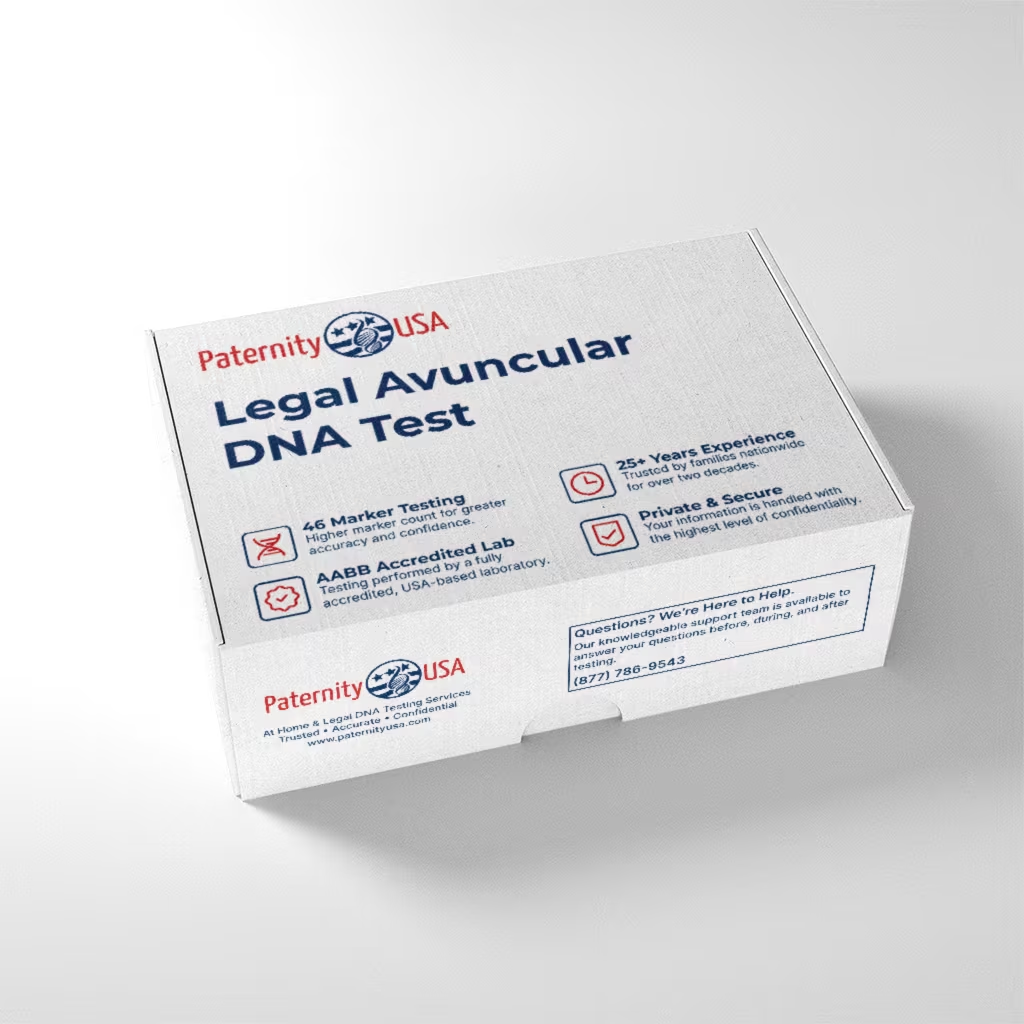
Additionally, If the father has a full sibling, meaning that he and the sibling share both parents, an avuncular test with that alleged aunt or uncle can be conducted. It is important to note that the alleged aunt or uncle MUST be a full sibling to the possible father, and not just a half sibling or you run the risk of getting inconclusive or false results.
Y-STR Male & MtDNA Female Line Testing:
Another type of test, called a Y-STR test, is available when 2 males are questioning a biological relationship. If both participants are male (such as an uncle/nephew, grandfather/grandson, etc.) this test is very conclusive, again basically giving a YES or NO answer. The Y-STR test however, does not determine what relationship exists between the 2 males, but instead it analyzes the Y chromosome that is passed down from male to male in the family lineage. The mitochondria tested in the Y-STR test is almost as unique as a fingerprint and only males from the same male line will have it in common. The same applies if you are looking for the Female line with a MtDNA test.
Half Sibling & Full Sibling Testing:
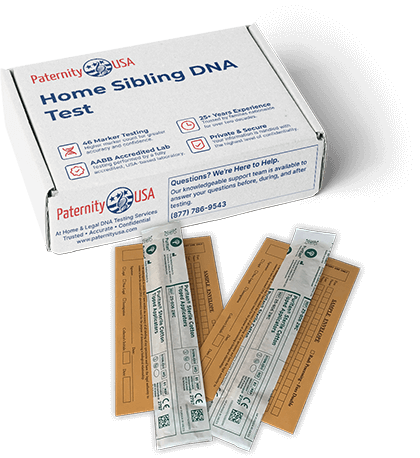
A sibling DNA test, or sibship test, is also commonly used to test when the father is not available. If there is someone that is known to be a child of the alleged father, testing with that person can help establish paternity. A siblingship DNA test is an easy way to find out if you have one or both parents in common thus helping to prove or disprove paternity.
Add the Mother or Choose 46 Marker Test:
In all of the tests mentioned above, except in a paternity or Y-STR test, it is recommended to add the mother to the test if she is available. This is recommended because half of our DNA comes from our mother and the other half from the father. If fatherhood is in question, adding the mother to a DNA test will compare mother to child, and therefore eliminate the half of the genetic profile that is not necessary for the testing.
Adding the mother to a DNA test will make the results much more conclusive. If not, consider upgrading your test to our flagship 46 marker DNA test which is the most scientifically robust relational DNA test on the internet.
When choosing a company to use for testing, be sure to remember that pricing isn’t everything. There are several low-cost paternity testing sites, however be sure to check how many markers are being analyzed because many hide or make obscure this information. Shipping options and accreditation are also valuable considerations, as they may end up costing more in the end than trusted USA companies like PaternityUSA who includes 2-way shipping at no charge and also in most cases, the mother can test for free. If you still not sure which test is best for your situation, please call us at (877) 785-9543, and a case manager can help!